
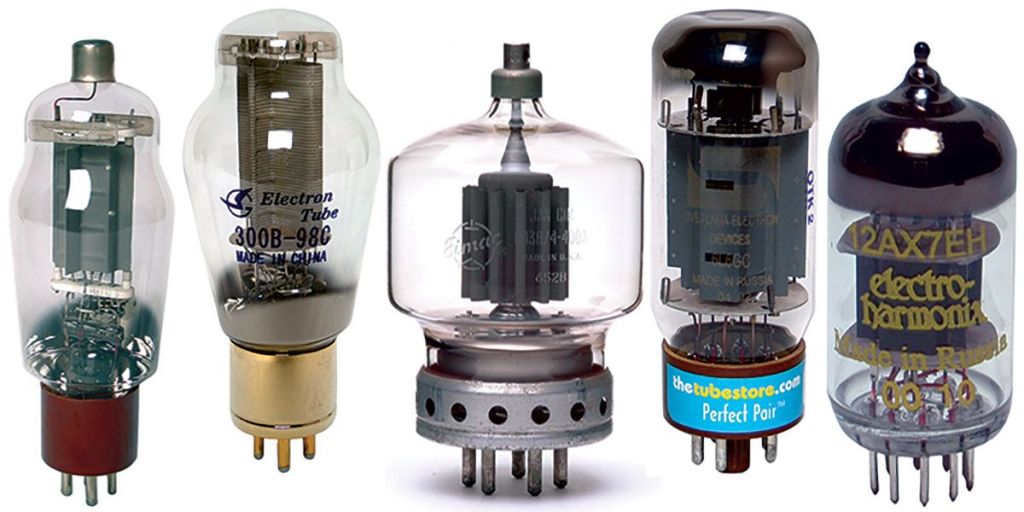
A vacuum tube, also called an electron tube, is a sealed-glass or metal-ceramic enclosure used in electronic circuitry to control the flow of electrons between the metal electrodes sealed inside the tubes. The air inside the tubes is removed by a vacuum. Vacuum tubes are used for amplification of a weak current, rectification of an alternating current to direct current (AC to DC), generation of oscillating radio-frequency (RF) power for radio and radar, and more.
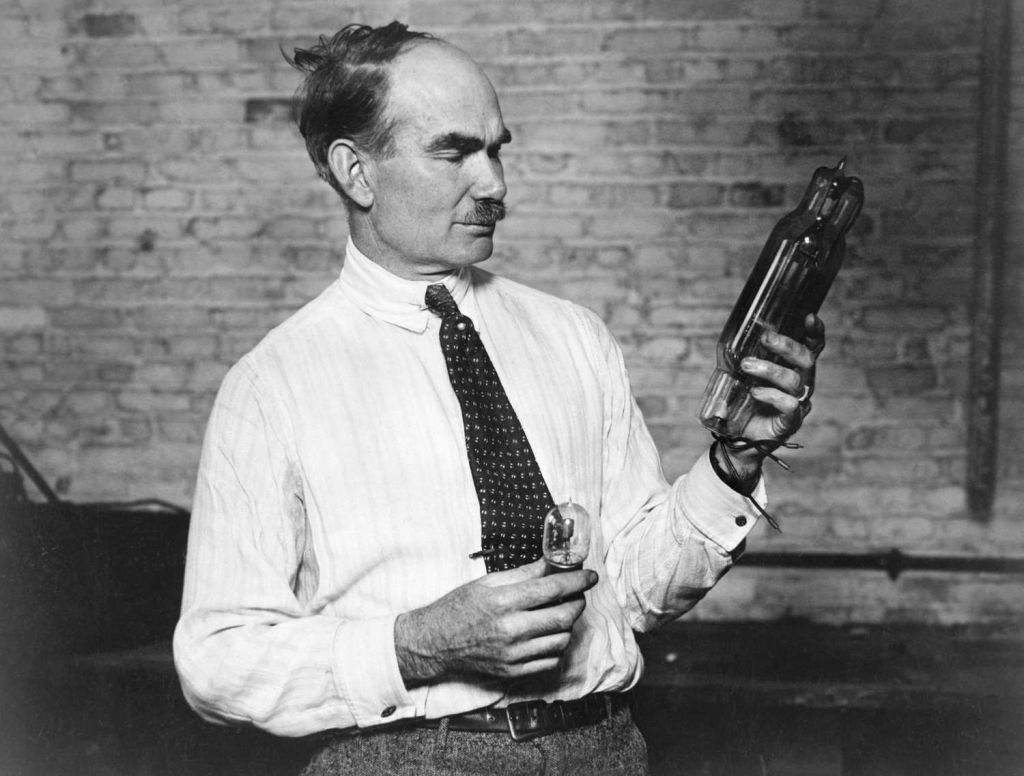
Fleming patented these tubes for the Marconi company in the UK, filing in November 1904, with patent issued in September 1905. Later known as the Fleming valve, the “oscillation valve” was developed for the purpose of rectifying radio-frequency current as the detector component of radio receiver circuits.
The history of vaccum tube in computer history
The invention of the vacuum tube may be viewed as the most groundbreaking contribution to modern computer history. Almost everything that was built to advance computer technology was built off of the functions of the vacuum tube itself. The inventor of the vacuum tube, Sir John Ambrose Fleming, is actually considered to be the father of electronics because of his pioneering invention. Without the invention of the vacuum tube, modern computers and maintenance management software probably wouldn’t even exist. For that reason, its history should be acknowledged, celebrated, and remembered.
The Beginnings of the Vacuum Tube
Sir John Ambrose Fleming, who was really good at understanding electricity, learned a lot from his teacher, James Clerk Maxwell. When Fleming was trying to make radio signals stronger, he came up with the vacuum tube. This tube worked by heating things up to release electrons, which made radio signals much clearer. This invention was super important because it became the basic building block for how computers work.

- Sir John Ambrose Fleming: Learn about the man primarily responsible for the invention of the vacuum tube on this page.
- John Fleming Educational Background: Fleming was a pioneer in the field of electronics.
- John Fleming and the Edison Effect: The discovery of a principle about how electrons flow led to the invention of the vacuum tube.
- Vacuum Tube Heralds Birth of Modern Electronics: Diodes based on Fleming’s model were key parts of radio receivers, TV sets, and other electronic devices.
Early vacuum tubes got better over time. First, there was the diode, which changed electricity from one type to another. Then, someone invented the triode, which made sounds louder. After that, the pentode made sound even louder. Finally, the magnetron was invented, which was another big step forward. So, each new version of the vacuum tube built on the last, improving how they worked.
How Amplifiers and Other Valves Function: Audio amplification equipment is built on technology that stemmed from the diode.
Different Types of Vacuum Tubes: Vacuum tubes can be large or small, and they can be found in all kinds of TV and radio equipment as well as early computers.
History of Vacuum Tubes: Fleming’s invention was developed over time and improved through the research of William Coolidge, Walter Schottky, and others.
General Information on Vacuum Tubes: Learn more about how electrons behave to make vacuum tubes work on this page.
The Anatomy of an Electron Tube: Lee De Forest developed the triode based on Fleming’s work, refining and improving the technology.Think of vacuum tubes like light bulbs, but instead of light, they control electricity.
* Making Sound Louder: The way we make sounds louder in speakers comes from the first type of vacuum tube.
* Many Shapes and Sizes: Vacuum tubes were used in old TVs, radios, and big, early computers.
* Getting Better Over Time: Scientists kept improving the original vacuum tube.
* Electron Control: They work by controlling tiny bits of electricity called electrons.
* The Triode’s Improvement: One guy took the original idea and added a part to make it even better at controlling electricity.
The ENIACThe Electronic Numerical Integrator and Computer, also known as the ENIAC, was the first computer that would use the vacuum tube. In fact, the ENIAC used 18,000 vacuum tubes in order to function, allowing signals to be sent and calculations to be performed more quickly through the use of electrical switching rather than the slower mechanical switching. Due to the large amount of electricity the ENIAC needed to stay powered, many people expected it to crash and burn. However, despite expectations, the vacuum tube successfully enabled the ENIAC to function and thrive. This set the precedent for the generations of functioning computers to follow.The ENIAC was a really early computer, and it was the first one to use vacuum tubes. It used a ton of them – 18,000! These tubes let the computer do calculations much faster than older machines.
Because it needed so much power, people thought it might break down. But it worked! The ENIAC showed everyone that vacuum tubes could make computers work well, and it paved the way for all the computers we have today.
How the ENIAC Was Created: The ENIAC was built on vacuum tubes, as they are a type of non-mechanical switch that can change positions much more quickly than a mechanical one.
What Made the ENIAC a Pioneering Computer: The ENIAC could add 5,000 numbers in just one second, an astounding feat for the time.
In-Depth History of the ENIAC: The ENIAC took up an entire room and contained 18,000 vacuum tubes.
How the ENIAC Was Programmed: Programming the ENIAC was much different than what software developers do today; this early work consisted of cables being plugged into plugboards.
The Transistor Age
While the vacuum tube served its purpose perfectly, scientists sought something more practical and efficient to take its place. Scientists William Shockley, John Bardeen, and Walter Brattain collaborated on inventing the transistor, which would replace the vacuum tube. The transistor worked more efficiently than the vacuum tube and operated on less power. Not only did this revolutionize computer technology, but it also allowed computers to become smaller and more cost-effective and advance at a faster pace. Transistors became the stepping stone between vacuum tubes and modern computer technology.
History of the Transistor: Transistors were developed at Bell Labs in New Jersey.
Biography of William Shockley: William Shockley, John Bardeen, and Walter Brattain worked to create the transistor.
All About the EDVAC: The EDVAC was designed as an improvement of the ENIAC and could use stored programs to function.
A Brief History of Computers: Over more than a century, numerous great minds participated in creating and refining the technology in computers.
Computer Technology After the Vacuum Tube
Creating and discovering computer technologies has progressed rapidly since the days of the vacuum tube, but the field of computing would not be where it is today without this important invention. Building on the transistor, the integrated circuit was born, and today, this technology is found in numerous devices, from desktop computers to video game consoles. But science is never content to rest on its laurels; new discoveries are always being made in an effort to create better and more efficient electronics.
How an Integrated Circuit Works: Today, integrated circuits have displaced single transistors in electronic devices.
How Technology Advanced From the Vacuum Tube: Improvements in electrical technology have brought us to the age of semiconductors and advanced transistors.
Return of the Vacuum Tube: Scientists are finding some value in the vacuum tubes of old, drawing on the idea of moving electrons in a vacuum to improve cutting-edge electronics.
The Five Generations of Computers: Vacuum tubes were used in computers until the mid-1950s, but today, they have been largely replaced by more modern technologies.
Scientists Are Bringing Back Vacuum Tubes for Computers of the Future: Modern vacuum tubes, re-engineered for advanced applications, may prove better than transistors for some uses.
————-
The Development of Computerized Maintenance Management (CMMS)
What is a CMMS? Computerized maintenance management system (CMMS) is a software program designed to manage maintenance activities and keep detailed maintenance records of all equipment and assets within an organization or facility.
CMMS Software: MAPCON has been creating CMMS Software since 1982. In fact, we had among the very first CMMS applications running on the original DOS systems.
Thanks


💬 COMMENT