
Let’s discuss about it,!!,
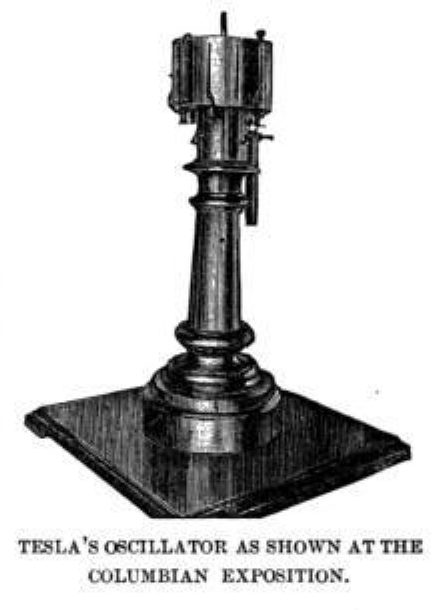
Nikola Tesla’s 1893 invention, often mislabeled as an “earthquake machine,” was in reality a steam-powered, electro-mechanical oscillator intended for the investigation of mechanical resonance and the production of electricity, rather than a device designed to intentionally induce seismic activity.
Let’s discuss in deep
As we discuss that Nikola Tesla’s 1893 invention, the electro-mechanical oscillator, was a steam-powered electric generator. Later, Tesla asserted that a modified version of this oscillator produced an earthquake in New York City in 1898, leading to its popular name, “Tesla’s earthquake machine.”
In 1896 Tesla was working on oscillations to be used for energy transfer. The idea was to create a steam-powered oscillator, able to create various frequencies. If the frequency matched the resonance frequency, a receiving device should transform the mechanical oscillations back into an electric current.

In 1898, Nikola Tesla’s experiments with his mechanical oscillator at his New York laboratory reportedly caused significant vibrations, alarming neighbors who feared an earthquake. This incident was later recounted by Tesla to reporter Allan L. Benson, who published an article in 1912. Tesla described attaching his “vibrator” to a steel beam in an unfinished ten-story building in the Wall Street district. He claimed that by adjusting the device, he caused the structure to creak and sway, sending construction workers fleeing in panic. Tesla asserted that with continued operation, he could have collapsed the building or even the Brooklyn Bridge.
Tesla envisioned peaceful applications for his invention, proposing a system where one device would convert electricity into vibrations, which would then be transmitted through the earth’s crust to a receiving device. This receiver would convert the oscillations back into electricity for local use. He demonstrated the power of his oscillator by vibrating an entire building, but also acknowledged its potential for causing earthquakes if its frequency matched the Earth’s resonant frequency. Later, in the 1930s, he explored the idea of using smaller devices to extract energy from the Earth to prevent earthquakes, a concept he termed “telegeodynamics.”
However, Tesla’s “telegeodynamics” system never progressed beyond the prototype stage. The device’s power was insufficient to transmit energy over long distances, and the oscillations were significantly dampened by structures and the earth itself. The practical challenges of overcoming these limitations proved insurmountable.
Despite the failure of his long-distance energy transmission concept, Tesla’s ideas contributed to the development of modern seismology. He proposed using oscillations to prospect the underground, where waves sent into the earth would be reflected by various geological structures. By analyzing the reflected waves, geologists could map the subsurface. This principle, utilizing energy pulses generated by electromagnetic devices, explosions, or mechanical pistons to create underground images, is the foundation of contemporary seismic exploration.


💬 COMMENT