
For centuries, humanity has sought a foolproof method to distinguish truth from lies. This quest led to the creation of the lie detector machine, more formally known as the polygraph. While often portrayed in popular culture as an infallible arbiter of truth, the reality is far more complex. This article delves into the invention of the polygraph, how it works, its limitations, and the ethical debate surrounding its use.
The Genesis of the Polygraph
The idea of using physiological responses to detect deception is not new. Early methods, such as the ancient Chinese rice test or the medieval hot water ordeal, were based on the belief that a guilty person would exhibit signs of stress or fear. However, it wasn’t until the late 19th and early 20th centuries that a more scientific approach began to take shape.
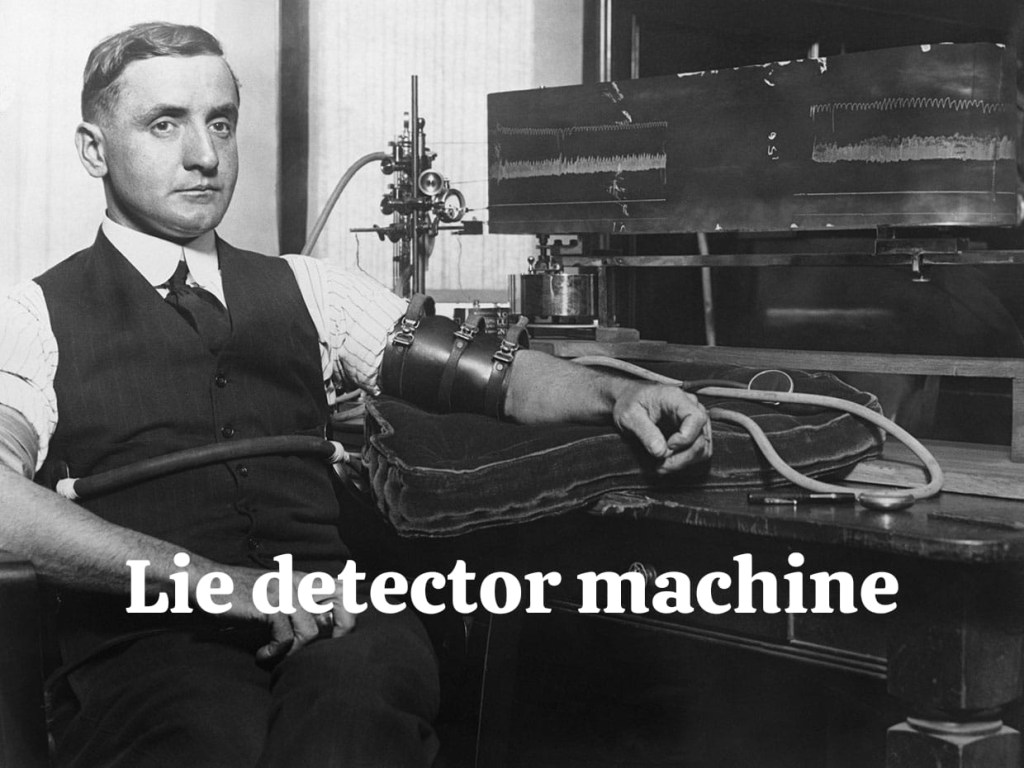
One of the first to apply physiological metrics was Italian criminologist Cesare Lombroso, who in 1895 used a device called a “hydrosphygmograph” to measure changes in blood pressure. His work laid the groundwork for future developments. The modern polygraph, however, is largely credited to American psychologist and police officer John Augustus Larson. In 1921, Larson created the first widely recognized polygraph machine, which he named the “cardio-pneumo-psychograph.” This innovative device was the first to simultaneously record multiple physiological indicators, including blood pressure, pulse, and respiration, on a single graph.
Larson’s work was later refined and improved by Leonarde Keeler, another American psychologist, who patented a more portable and robust version of the polygraph in the 1930s. Keeler’s contributions made the machine more practical for use in law enforcement, cementing its place in popular imagination as a tool for crime detection.
How a Polygraph Works: The Science of Arousal
The fundamental principle behind the polygraph is that lying causes a person to experience stress, which in turn triggers involuntary physiological responses. The polygraph machine doesn’t directly detect lies; instead, it measures these physical changes. A typical polygraph test involves several components attached to the subject’s body:
* Pneumographs: Two corrugated rubber tubes are placed around the subject’s chest and abdomen to monitor changes in breathing and respiration rate.
* Blood Pressure Cuff: An arm cuff measures blood pressure and pulse rate, with an increase often associated with anxiety or stress.
* Electrodes: Sensors attached to the fingers measure skin conductivity, also known as galvanic skin response. This detects subtle changes in perspiration, a common stress indicator.
During a polygraph test, an examiner asks a series of questions. These questions are typically categorized into three types:
* Irrelevant Questions: These are simple, non-threatening questions (e.g., “Is your name John Doe?”) to establish a baseline of the subject’s physiological responses.
* Control Questions: These are broad, often ambiguous questions designed to provoke a response from both innocent and guilty individuals (e.g., “Have you ever told a lie to get out of trouble?”). The assumption is that an innocent person will show a greater reaction to these questions than to the relevant questions.
* Relevant Questions: These are the direct questions related to the specific crime or issue being investigated (e.g., “Did you steal the money?”).
The examiner then analyzes the chart recordings, looking for significant differences between the subject’s responses to the control questions and the relevant questions. A stronger physiological reaction to the relevant questions compared to the control questions is interpreted as an indication of deception.
Accuracy, Reliability, and Controversy
Despite its widespread use in certain contexts, the polygraph has been the subject of intense debate regarding its accuracy and reliability. The central criticism is that there is no unique physiological response to lying. Anxiety, nervousness, fear, and even certain medical conditions can all produce similar physiological reactions to those a person might experience when being deceptive. An innocent person who is simply nervous about the test could be incorrectly flagged as lying, resulting in a “false positive.”
The accuracy of polygraph tests can vary widely, with estimates ranging from 70% to over 90%, depending on the study and the methodology used. Factors such as the examiner’s skill, the subject’s emotional state, and even the use of “countermeasures” (techniques to deliberately manipulate one’s physiological responses) can significantly impact the results. Because of these limitations, polygraph results are generally not admissible as evidence in court in most jurisdictions.
The Ethical and Legal Landscape
The use of polygraph tests raises a number of ethical and legal concerns. These include:
* Invasion of Privacy: The test requires individuals to disclose personal information and can be highly intrusive.
* Voluntary Consent: While a person cannot be forced to take a polygraph, the context in which they are offered (e.g., in a criminal investigation or for a job) can create a coercive environment.
* Fairness and Justice: The possibility of false positives and the reliance on subjective interpretation by the examiner can lead to unjust outcomes, particularly for innocent individuals who may be wrongfully accused.
The lie detector machine, or polygraph, stands as a testament to our persistent fascination with the human mind and our desire to uncover the truth. While it has evolved from a simple contraption to a sophisticated computer-based system, its core function remains the same: to measure the physiological manifestations of stress. The ongoing debate over its accuracy and ethical implications reminds us that while the quest for a perfect truth-detecting device continues, the complexities of human behavior and psychology may always be a step ahead.


💬 COMMENT