
Earlier we have discuss about voltaic pile, the first battery but today we discuss about a very unknown battery
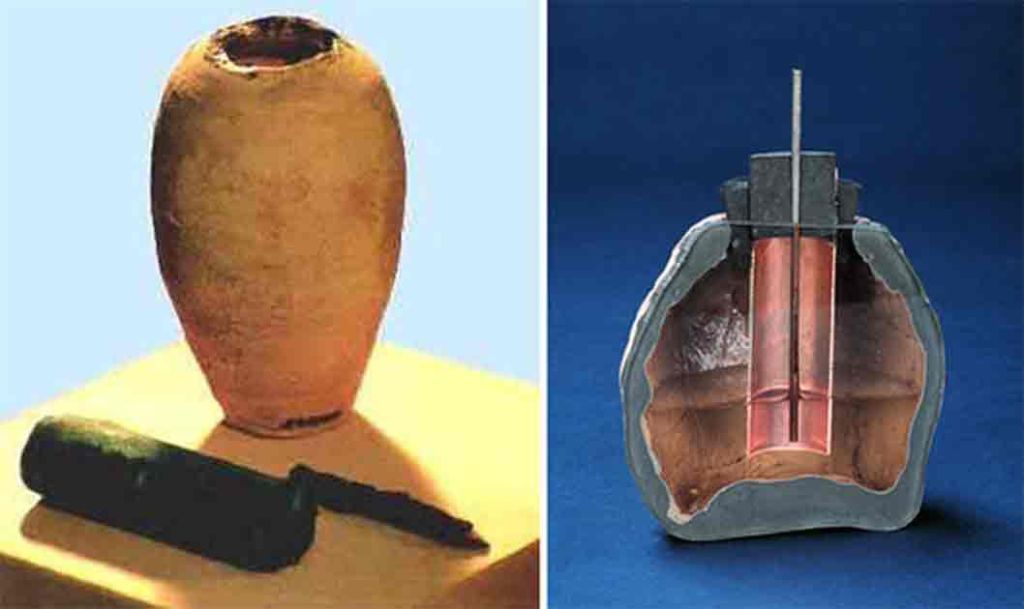
In 1936, during excavations near Baghdad, Iraq, archaeologists uncovered a curious artifact that has puzzled researchers and sparked debates for decades: the so-called “Baghdad Battery.” This small, unassuming object—a clay jar containing a copper cylinder and an iron rod—has fueled speculation about whether ancient civilizations possessed knowledge of electricity long before the modern era. While its true purpose remains uncertain, the Baghdad Battery offers a fascinating glimpse into the ingenuity of ancient Mesopotamia and raises intriguing questions about the history of technology.
Discovery and Description
The Baghdad Battery was discovered in Khujut Rabu, a village southeast of Baghdad, during excavations led by German archaeologist Wilhelm König. The artifact, dated to the Parthian period (circa 250 BCE to 224 CE), consists of a 5-inch-tall terracotta jar with a stopper made of asphalt. Inside the jar is a copper cylinder, which encases an iron rod. The components are held together by asphalt, and traces of a corrosive substance, possibly vinegar or wine, were found inside.König, who later studied the artifact at the Iraq Museum, proposed a bold hypothesis: the jar was an ancient galvanic cell, a rudimentary battery capable of generating an electric current. This idea gained traction because the configuration resembled a simple electrochemical cell, similar to those used in early modern experiments with electricity.
How It Might Work
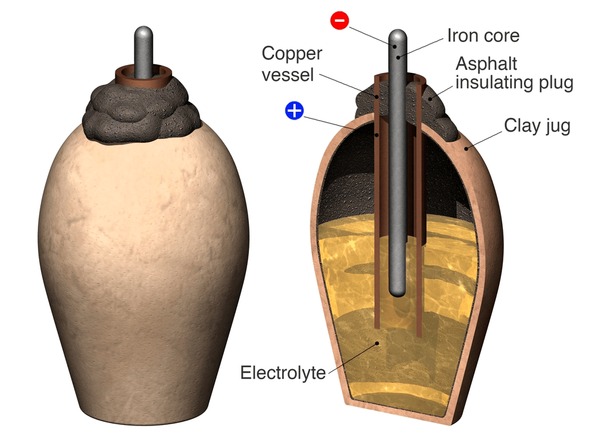
A galvanic cell generates electricity through a chemical reaction between two different metals (electrodes) immersed in an electrolyte solution. In the case of the Baghdad Battery, the copper cylinder and iron rod could serve as electrodes, with an acidic liquid like vinegar acting as the electrolyte. When connected, such a setup could theoretically produce a small voltage—perhaps 0.5 to 1 volt.In experimental recreations, researchers filled replica jars with vinegar or lemon juice and measured a weak electric current. While the voltage is low, it’s enough to suggest the device could have been used for specific purposes, such as electroplating (depositing a thin layer of metal onto a surface) or medicinal applications.
Theories About Its Purpose
The Baghdad Battery’s potential as an electrical device has led to several theories about its use:1. **Electroplating**: One popular hypothesis is that the device was used to electroplate objects, such as coating silver items with gold. While no direct evidence of electroplated artifacts from the Parthian period has been found, the technique was known in later eras, and the battery’s design supports this possibility.
2. **Medicinal or Ritual Use**: Some scholars suggest the battery may have been used in religious or medicinal practices, perhaps to deliver mild electric shocks. Ancient texts describe the use of electric eels for treating ailments like headaches, and a low-voltage device could have served a similar purpose, creating a tingling sensation interpreted as divine or healing.
3. **Ceremonial Object**: Another theory posits that the jar was not an electrical device but a storage vessel for sacred scrolls or liquids. The copper and iron components might have been incidental, used to reinforce the jar or for symbolic purposes.
4. **Experimental Curiosity**: It’s also possible that the device was an early experiment in electrochemistry, created by a curious artisan or scholar. The Parthians were skilled metallurgists, and their knowledge of chemistry may have extended to rudimentary electrical phenomena.
Skepticism and Alternative Explanations
Despite the excitement surrounding the Baghdad Battery, many archaeologists and scientists remain skeptical. Critics argue that the artifact lacks clear evidence of electrical use, such as wires or conductive connections. Additionally, no contemporary texts or artifacts explicitly support the idea that ancient Mesopotamians understood electricity.An alternative explanation is that the jar was simply a storage vessel for liquids like wine or vinegar, with the metal components serving a structural or decorative role. Similar jars from the period have been found without the internal copper-iron setup, suggesting the “battery” may not have been unique or intentionally designed for electricity.
Cultural and Historical Context
The Parthian Empire, which ruled Mesopotamia during the artifact’s estimated creation, was a sophisticated civilization known for its advancements in metallurgy, art, and trade. The region was a crossroads of cultures, blending Persian, Greek, and local traditions. This cultural exchange may have fostered experimentation with materials and techniques, making the idea of an electrochemical device less far-fetched.However, the absence of written records or additional artifacts complicates the battery hypothesis. If the device was indeed a battery, it raises questions about why the technology did not spread or persist in the historical record.
Modern Experiments and Popular Culture
The Baghdad Battery gained wider attention through experiments and media coverage. In the 1970s, replicas were tested on television programs, demonstrating that the device could generate a small current. These experiments fueled speculation about “ancient electricity” and inspired fringe theories about lost technologies or even extraterrestrial influence.The artifact has also appeared in popular culture, often exaggerated as evidence of advanced ancient knowledge. While such claims are largely unfounded, they highlight the enduring fascination with the Baghdad Battery as a symbol of human ingenuity.
Conclusion
The Baghdad Battery remains one of archaeology’s great mysteries. Whether it was a primitive battery, a ceremonial object, or something else entirely, it challenges our assumptions about the technological capabilities of ancient civilizations. While definitive proof of its purpose may never surface, the artifact underscores the importance of keeping an open mind about the past. The ingenuity of ancient Mesopotamians, whether they harnessed electricity or not, continues to captivate and inspire, reminding us that history is full of surprises waiting to be uncovered.
read our blog on voltaic pile


💬 COMMENT