
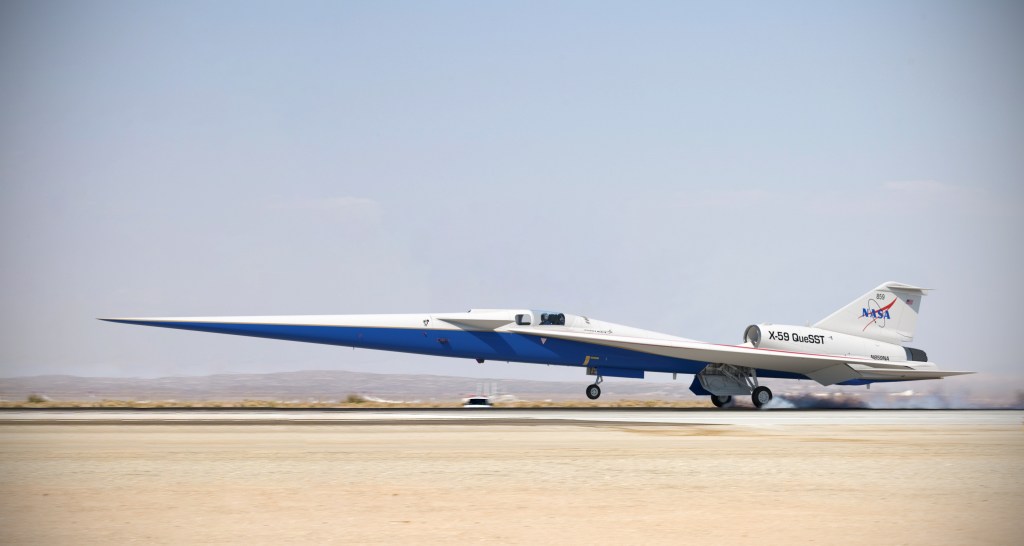
When it comes to pushing the boundaries of aviation, NASA has always been at the forefront of innovation. The agency’s latest marvel, the **X-59 Quiet SuperSonic Technology (QueSST)** aircraft, is not only the fastest plane in NASA’s current arsenal but also a revolutionary step toward making supersonic travel practical, quieter, and more accessible. Developed in collaboration with Lockheed Martin, the X-59 is designed to break the sound barrier with a whisper, potentially transforming commercial aviation by enabling supersonic flights over land without the disruptive sonic booms that have long restricted such travel.
Read the first plane
A New Era of Speed
The X-59 QueSST is engineered to cruise at a speed of **Mach 1.4**, or approximately **1,060 miles per hour (1,700 kilometers per hour)** at an altitude of 55,000 feet. This makes it significantly faster than any commercial airliner today, which typically cruises at speeds between 550 and 600 mph. While NASA has a storied history of high-speed aircraft—like the X-15, which reached speeds of Mach 6.7 in the 1960s—the X-59 is unique in its focus on combining speed with practicality for future commercial use.The X-59’s speed, while not the fastest in NASA’s historical lineup, is optimized for its mission: to demonstrate that supersonic flight can be achieved without generating the loud sonic booms that have historically grounded such aircraft over populated areas. By achieving Mach 1.4 with a reduced noise profile, the X-59 aims to pave the way for regulatory changes that could allow commercial supersonic flights over land, something banned in the United States since 1973 due to noise concerns.
read the first plane
The Science Behind the Silence
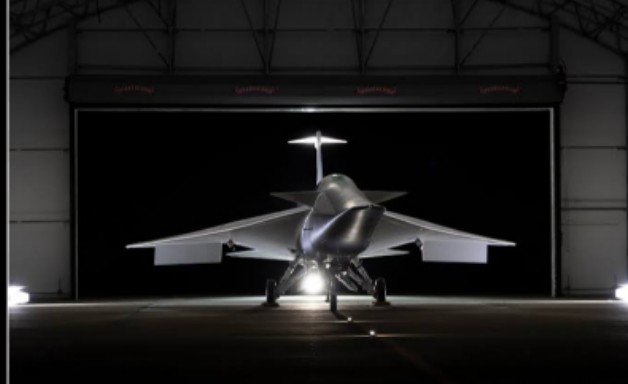
The defining feature of the X-59 is its ability to produce a **“soft thump”** instead of the traditional sonic boom. A sonic boom occurs when an aircraft exceeds the speed of sound (Mach 1, roughly 767 mph at sea level), causing shockwaves that merge into a loud, disruptive noise heard on the ground. The X-59’s sleek, aerodynamic design—measuring 94 feet long with a needle-like nose and a highly swept delta wing—spreads these shockwaves apart, preventing them from coalescing into a loud boom. NASA estimates the resulting sound will be about **75 perceived level decibels (PLdB)**, comparable to a car door closing, rather than the 105–120 PLdB of traditional sonic booms.This quiet supersonic technology is the result of decades of research into aerodynamics and shockwave mitigation. The X-59’s unique shape, including its long, slender nose and strategically placed engine atop the fuselage, minimizes the pressure disturbances caused by breaking the sound barrier. The aircraft’s design also incorporates advanced computational fluid dynamics and wind tunnel testing to ensure optimal performance.
Key Features of the X-59-
**Speed**: Mach 1.4 (1,060 mph), making it one of the fastest operational aircraft in NASA’s current fleet.-
**Length**: 94 feet, with a 29.5-foot wingspan.-
**Engine**: A single General Electric F414 engine, providing the thrust needed for supersonic flight.-
**Cockpit**: A revolutionary eXternal Vision System (XVS) replaces the traditional forward window with a 4K camera and display, compensating for the long nose that obstructs the pilot’s view.-
**Mission**: To gather data on public perception of its reduced sonic thump, informing future regulations for commercial supersonic flight.
Testing and Timeline
The X-59 was unveiled in January 2024 at Lockheed Martin’s Skunk Works facility in Palmdale, California, after years of development under NASA’s Low-Boom Flight Demonstration program. As of September 2025, the aircraft is undergoing ground testing, with its first flight scheduled for late 2025 or early 2026. Once airborne, NASA plans to conduct a series of test flights over select U.S. communities to measure public response to the aircraft’s sound profile. The data collected will be shared with the Federal Aviation Administration (FAA) and international regulators to potentially revise restrictions on overland supersonic flight.
Historical Context:
NASA’s Legacy of SpeedWhile the X-59 is NASA’s fastest active aircraft, it’s worth noting its place in the agency’s storied history of high-speed flight:- **X-15 (1959–1968)**: This rocket-powered plane reached a record-breaking **Mach 6.7 (4,520 mph)**, making it the fastest piloted aircraft in history. It was designed for hypersonic research and flew at the edge of space.- **SR-71 Blackbird (1964–1998)**: Although operated by the U.S. Air Force, NASA used the SR-71 for research, achieving speeds up to **Mach 3.3 (2,200 mph)**.-
**X-43A Pegasus (2004)**: An unmanned scramjet-powered aircraft, it reached **Mach 9.6 (7,346 mph)**, the fastest recorded speed for an air-breathing aircraft.Unlike these predecessors, which were primarily research vehicles, the X-59 is designed with a direct path to real-world application, aiming to influence the future of commercial aviation.
The Future of Supersonic
TravelThe X-59’s success could usher in a new era of air travel, where flights across continents are cut in half. For example, a trip from New York to London, which currently takes about 7 hours, could be completed in under 4 hours. Companies like Boom Supersonic, which is developing the Overture jet, are closely watching the X-59’s progress, as its data could shape the regulatory landscape for their own supersonic designs.However, challenges remain. Supersonic aircraft are less fuel-efficient than subsonic jets, raising concerns about environmental impact. NASA and its partners are exploring sustainable aviation fuels and advanced engine technologies to mitigate this. Additionally, the high cost of developing and operating supersonic aircraft could limit their accessibility, at least initially, to premium travelers.
Conclusion
NASA’s X-59 QueSST is more than just the fastest plane in the agency’s current lineup—it’s a bold step toward redefining air travel. By combining blistering speed with groundbreaking noise reduction, the X-59 has the potential to break down barriers that have limited supersonic flight for decades. As it prepares for its first flight and community testing, the world watches eagerly to see if this sleek, silent speedster can make commercial supersonic travel a reality. With the X-59, NASA is not just chasing speed—it’s chasing a future where the skies are faster, quieter, and more connected than ever before.*For more information on NASA’s X-59 program,
read our blog on jet engine working


💬 COMMENT