
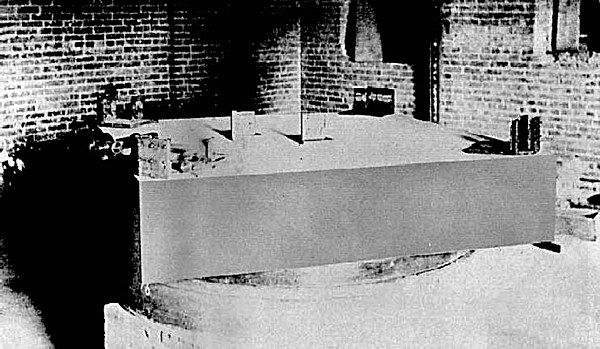

The Michelson-Morley experiment, conducted in 1887 by Albert Michelson and Edward Morley, was a groundbreaking study in physics that challenged the long-held notion of the existence of luminiferous aether, a hypothetical medium thought to be necessary for the propagation of light waves. This experiment had a profound impact on the development of modern physics, paving the way for Albert Einstein’s theory of special relativity.
Background and Purpose
In the 19th century, scientists believed that light waves required a medium, known as luminiferous aether, to propagate through space. This idea was based on the understanding of wave behavior, where waves were thought to require a physical medium to transmit energy. The Michelson-Morley experiment aimed to detect the presence of aether and measure its effects on the speed of light.
The Experiment
The Michelson-Morley experiment used an interferometer, a device that splits a beam of light into two perpendicular paths. One path was aligned with the Earth’s motion around the Sun, while the other path was perpendicular to it. The experiment was designed to detect any differences in the speed of light along these two paths, which would indicate the presence of aether.
Results and Implications
The results of the Michelson-Morley experiment were unexpected and revolutionary. Despite precise measurements, the experiment showed no significant difference in the speed of light along the two paths. This null result indicated that the speed of light was constant, regardless of the motion of the observer or the medium.
The implications of this experiment were profound. It challenged the notion of luminiferous aether and suggested that light could propagate through a vacuum without a medium. This finding laid the foundation for Albert Einstein’s theory of special relativity, which posits that the laws of physics are the same for all observers in uniform motion and that the speed of light is always constant.
Impact on Modern Physics
The Michelson-Morley experiment has had a lasting impact on modern physics. It:
1. Challenged the aether theory: The experiment’s null result led to the abandonment of the luminiferous aether theory, paving the way for new understanding of light and space.
2. Influenced special relativity: The experiment’s findings on the constancy of the speed of light were a key component of Einstein’s theory of special relativity.
3. Shaped modern physics: The Michelson-Morley experiment’s results have been consistently supported by subsequent experiments, solidifying our understanding of the nature of light, space, and time.
Conclusion
The Michelson-Morley experiment was a groundbreaking study that challenged our understanding of the universe and paved the way for major breakthroughs in modern physics. Its findings have had a lasting impact on our understanding of light, space, and time, and continue to shape the course of scientific inquiry.


💬 COMMENT