
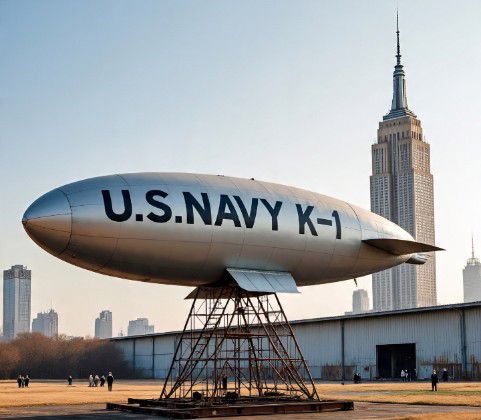
A Journey Through Time. We Unveil the Secrets of America’s Majestic Airships.
Imagine a time when airships were the epitome of luxury and innovation, and the US Navy was at the forefront of this technological revolution. Welcome to the world of US zeppelins, where the boundaries of aviation were pushed to new heights (literally!). In this article, we’ll take you on a journey through the fascinating history of US zeppelins, from their humble beginnings to their tragic downfall.
The Dawn of a New Era: The Early Years of US Zeppelins
It was 1915. The world stood at the brink of a new era in aviation. The US Navy, eager to explore the possibilities of airships, began to develop its own fleet of zeppelins. The first of these was the USS Los Angeles (ZR-3). This German-built airship would pioneer the US zeppelin program. Delivered to the US Navy in 1924, the Los Angeles was a behemoth of an airship, measuring 656 feet long and 85 feet in diameter. Its five engines and top speed of 80 mph made it an impressive sight to behold.
The Golden Age of US Zeppelins: A Time of Innovation and Exploration
The 1920s and 1930s are often called the “Golden Age” of zeppelins. This period was marked by significant advancements and widespread use. During this time, the US Navy started a collaboration with the Goodyear Tire and Rubber Company to develop and build their own zeppelins. The most famous of these was the USS Akron (ZRS-4), built by the Goodyear-Zeppelin Corporation and delivered to the US Navy in 1931. The Akron was a marvel of modern engineering, measuring 785 feet long and 132 feet in diameter. Its eight engines and top speed of 85 mph made it the largest and fastest airship in the world at the time.
The Hindenburg Disaster: A Turning Point in History

The Hindenburg disaster was a major turning point in the history of US zeppelins. On May 6, 1937, the German zeppelin Hindenburg caught fire and crashed while attempting to dock in Lakehurst, New Jersey. The disaster killed 36 people and marked the end of the era of passenger zeppelins. The US Navy continued to use zeppelins for military purposes, but the public’s perception of these airships had changed forever.
The Decline of the US Zeppelins: A Legacy of Innovation
After the Hindenburg disaster, the use of zeppelins in the United States began to decline. The US Navy continued to use zeppelins for military purposes, but the number of airships in service gradually decreased. The last US Navy zeppelin, the USS Los Angeles (ZPG-3W), was retired in 1962. Although the era of US zeppelins is over, their legacy lives on. Many advances were made during this time. The development of zeppelins significantly advanced aviation technology. Many of the innovations from this era are still in use today.
Conclusion: A Lasting Legacy
The story of US zeppelins is a fascinating one, full of innovation, exploration, and tragedy. Although the era of zeppelins is over, their legacy lives on. Many advances were made during this time. As we look to the future of aviation, we should remember the lessons of the past. Zeppelins played an important role in shaping the course of history.
Want to learn more about US zeppelins? Check out these resources:
– [US Naval History and Heritage Command]((read here )): A wealth of information on the history of the US Navy, including its zeppelin program.
– [Goodyear Tire and Rubber Company]((read here )): Learn more about the company’s role in the development of zeppelins and its current projects.
– [National Archives]((read here)): Access a wide range of historical documents and records, including those related to the US zeppelin program.


💬 COMMENT