
#ladakh_red_sky #top_news #ladakh_night_sky_red_glow_causes #rare_ladakh_sky_phenomenon_explanation
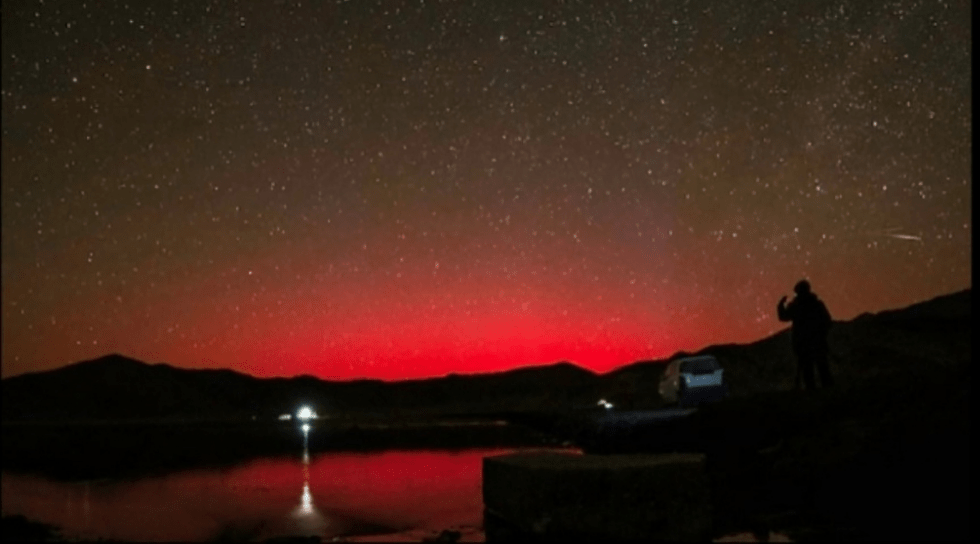
Nestled in the rugged heights of the Indian Himalayas, Ladakh is a land of stark beauty, where snow-capped peaks pierce the endless blue skies by day, and the nights reveal a blanket of stars untouched by city lights. But every so often, this remote region surprises even its hardy inhabitants with a phenomenon that turns the heavens into a canvas of crimson wonder: the red sky aurora. This ethereal display, often mistaken for a fiery sunset or an otherworldly omen, is a testament to the dynamic interplay between our planet and the sun. It’s not just a visual treat; it’s a window into the forces shaping our world from millions of miles away.
What Causes the Red Glow?
At its core, the red sky in Ladakh is an aurora, similar to the famous Northern Lights seen in places like Iceland or Canada. Auroras happen when charged particles from the sun—ejected during solar flares or coronal mass ejections—crash into Earth’s magnetic field. These particles are funneled toward the poles, where they collide with gases in the atmosphere, exciting atoms and causing them to release energy as light.In Ladakh, which sits at a relatively low latitude compared to typical auroral zones, the red color dominates because of the specific conditions. Oxygen atoms high in the atmosphere, around 200-300 kilometers up, get energized and emit a deep red hue when they return to their ground state. This is different from the greens and purples seen closer to the poles, where lower-altitude interactions prevail. The high altitude of Ladakh itself—over 4,000 meters in places like Hanle—adds to the clarity, as thinner air and minimal light pollution make the glow more vivid. When a particularly strong solar storm hits, the auroral oval expands southward, bringing this spectacle to unexpected latitudes.I recall how these events tie into the sun’s 11-year cycle of activity. During solar maximum, flares become more frequent, increasing the chances of such displays. It’s like the sun throwing a tantrum, and Earth catching the sparks in a beautiful, if unpredictable, light show.
A Night to Remember in Hanle
Imagine standing in Hanle, a tiny village in eastern Ladakh known for its astronomical observatory. The air is crisp, the silence profound, broken only by the occasional whisper of wind through the valleys. Suddenly, the sky begins to shift. What starts as a faint pink blush on the horizon deepens into a blood-red veil, stretching across the dome of night. The mountains below take on an eerie glow, as if the earth itself is reflecting the heavens’ passion.Locals and astronomers alike pause in awe. For scientists at the Indian Astronomical Observatory, it’s a chance to study space weather up close. They set up cameras to capture the dance of lights, analyzing how the solar wind compresses Earth’s magnetosphere. For villagers, it might evoke ancient tales of gods painting the sky or signals from the cosmos. Tourists, if they’re lucky enough to be there, snap photos that go viral, drawing more adventurers to this off-the-beaten-path destination.One thing that strikes me is how fleeting it is. The red sky might last for hours on a good night, but it’s gone by dawn, leaving only memories and perhaps a subtle reminder of our vulnerability to cosmic events.
Beyond Beauty: The Hidden Warnings
While the red aurora is mesmerizing, it’s also a subtle alarm bell. Strong solar storms can disrupt more than just the night sky—they can interfere with satellite communications, GPS signals, and even power grids. Think about it: in our tech-dependent world, a particularly intense flare could cause blackouts or navigation errors, affecting everything from flights over the Himalayas to remote communications in Ladakh itself.This phenomenon encourages us to think bigger. It highlights the need for better monitoring of solar activity, perhaps through international collaborations. In Ladakh, where isolation is both a blessing and a challenge, such events underscore the importance of resilience—stocking up on essentials, having backup systems, and appreciating the raw power of nature.
Embracing the Wonder
The red skies of Ladakh aren’t just a scientific curiosity; they’re a call to wonder. In a fast-paced world, they remind us to look up, to pause and connect with the universe. If you’re planning a trip, aim for the clearer months like winter, when the skies are at their darkest. Pack warm clothes, a good camera, and an open mind. Who knows? You might witness the heavens bleed red, a sight that etches itself into your soul.In the end, Ladakh’s red sky is a blend of science and magic, a rare gift from the sun to one of Earth’s most enchanting corners. It’s a story written in light, one that invites us all to ponder our place in the grand cosmic tapestry.
#ladakh_red_sky #rare_ladakh_sky_phenomenon_explanation


💬 COMMENT