
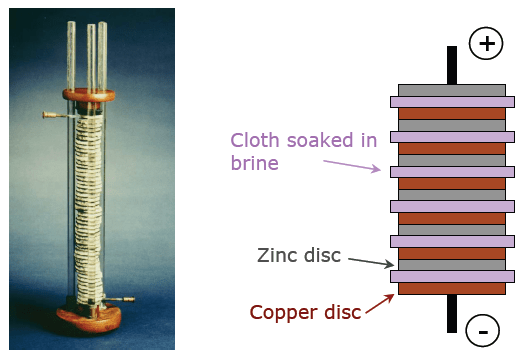
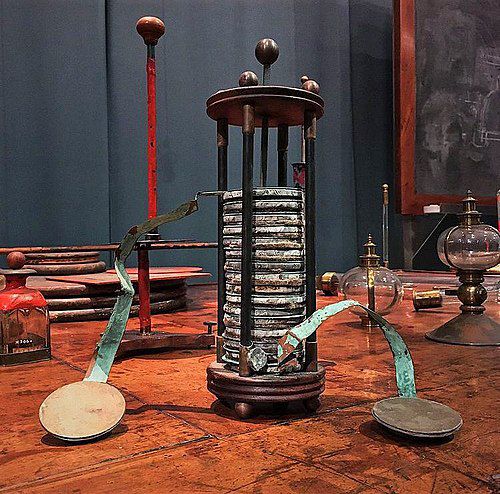
Alessandro Volta’s 1799 invention of the voltaic pile, the first continuous-current electrical battery, stemmed from a debate with Luigi Galvani over frog leg experiments; this breakthrough enabled significant scientific advancements, including William Nicholson and Anthony Carlisle’s electrolysis of water in 1800, and Humphry Davy’s isolation of elements like sodium, potassium, and calcium between 1807 and 1808, marking a pivotal moment in the development of electrochemistry.


The 19th-century electrical industry was fundamentally dependent on voltaic batteries, with notable examples like the Daniell and Grove cells, serving as the sole power source until the transformative arrival of the dynamo in the 1870s, which ushered in a new era of electrical generation.


💬 COMMENT