

“Today, we’ll explore how much of our brain’s potential we actually use. Can we control things with our mind using superpowers? What’s the pill that students take to remember everything they’ve studied and create new recall during exams? How do soldiers manage to fight without sleep for 40-40 hours in war situations? Which medicine has eliminated the feeling of fatigue from the brain? How real is telekinesis? If we artificially enhance our brain, why would it lead to disaster?
Let me clarify that I’m not a biology expert, so don’t expect detailed biological explanations in this blog. However, I’ll tell you the origin story of the concepts mentioned above. So, let’s get started!”

“In 1907, a psychologist named William James wrote a book called ‘Energies of Men’. In it, he mentioned that humans use only a small part of their mental potential. After saying this, the brother (William James) passed away.
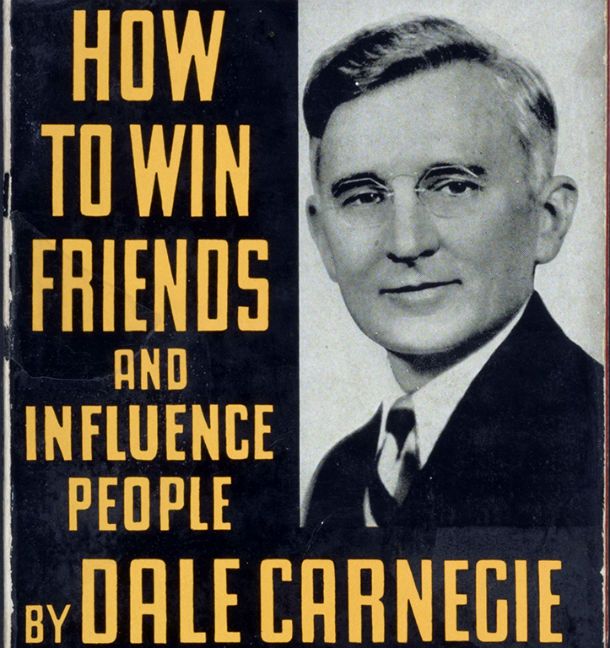
Twenty-three years later, in 1930, Lowell Thomas, a journalist, and Dale Carnegie, an author, entered the scene. The author wrote a book titled ‘How to Win Friends and Influence People’. To promote this book, they got Lowell Thomas to praise it. And that’s when things got out of hand.
This journalist, Lowell Thomas, quoted William James as saying that humans only use 10% of their brain capacity. He implied that if we could tap into more of our brain’s potential, who knows what incredible feats we could achieve. The world latched onto this idea and believed it to be true.
The book became a huge hit, and Lowell Thomas started getting invited to give lectures on the 10% concept. However, no one bothered to fact-check the validity of this claim.”
In 2008, research on brain activity revealed that humans use different parts of their brain in various situations, but we do utilize the entire brain. This discovery put the 10% myth to rest. However, the intrigue surrounding brain manipulation continued.

The character Bucky Barnes from Captain America, whose brain was conditioned to follow orders, was inspired by real-life experiments. One such experiment was Project MK Ultra, a secret US government program aimed at developing techniques for controlling human behavior.
Project MKUltra

MKUltra involved experiments on unwitting subjects, using techniques like hypnosis, sensory deprivation, and LSD administration to create “super-soldiers” with conditioned responses. The goal was to manipulate individuals into carrying out covert operations without remembering their actions.
The program, active from 1953 to 1973, was exposed in 1975, sparking widespread controversy. The CIA claimed the project was aimed at countering Soviet and Chinese mind control efforts, but its ethics and methods remain questionable.
During World War II, Japan had occupied Korea. The US dropped atomic bombs on Japan, and Japan surrendered. After that, Korea was divided between the US and the Soviet Union. North Korea was supported by the Soviet Union and China, while South Korea was supported by the US. In 1950, China and the Soviet Union encouraged North Korea to attack South Korea. The US supported South Korea, and the war began. Many American soldiers were captured by North Korea and interrogated. Their statements were made public, causing embarrassment for the US government. US military officials claimed that these soldiers had been brainwashed, and the government launched an investigation.
The CIA’s Response and the Start of Project MKUltra
The US government ordered the CIA to develop methods for controlling human behavior. The CIA initiated Project MKUltra, which involved experiments using hypnosis, sensory deprivation, and LSD administration to control people’s minds. The goal of this project was to create “super-soldiers” who would follow orders without question. The experiments often used vulnerable individuals, such as those on death row or homeless people. Many were subjected to inhumane experiments, resulting in deaths, mental damage, or long-term psychological trauma.
By 1955, CIA researchers realized that the brain is a chemical machine, and certain chemicals can alter thinking, focus, and emotions. This understanding led to the development of nootropics, or smart drugs, designed to enhance cognitive abilities.
In 1960, Dr. Corneli, a Belgian neuroscientist, created Piracetam, a drug that improved memory and concentration. This discovery sparked interest in cognitive enhancers, and soon, astronauts, soldiers, and athletes were using these substances to boost performance.
The US and other Western countries invested heavily in developing mind-enhancing drugs. In 1970, French scientist Michel Jouvet discovered Adrafinil, a drug that eliminated fatigue and boredom. The US used this substance in Operation Desert Storm.
The pursuit of cognitive enhancement continues, raising questions about ethics, safety, and the implications of altering human behavior.
In 1960, Belgian neuro scientist Dr. Corneli was working on a solution for insomnia. He created a medicine, but things didn’t go as planned. Instead of inducing sleep, the medicine had the opposite effect – it eliminated sleep. However, as a side effect, it improved memory and concentration. This medicine was named Piracetam. It was the world’s first drug that enhanced brain power.
After this discovery, Dr. Corneli started getting invitations to give lectures. The news reached the US, and soon, scientists were funded to explore its potential. Astronauts, soldiers, fighter pilots, researchers, and even Olympic athletes were using the drug to enhance their cognitive abilities. The West began a race to develop brain-boosting medications.

In 1970, French scientist Michel Jouvet discovered Adrafinil, a drug that eliminates fatigue and boredom. This drug was powerful enough to be used by the US in Operation Desert Storm.
Let’s get this story going too. It was 1979, and the Islamic Revolution had taken place in Iran. Saddam Hussein, sitting in Iraq, got nervous and thought, why not capture Iran and give it a good thrashing? If Iran could be defeated, Saddam would become the center of attention, and his throne would be secure. So, in 1980, Iraq attacked Iran. But Iran wasn’t a pushover, and they fought back. Saddam Hussein was caught off guard and thought, “This isn’t going as planned.”
He then borrowed money from Saudi Arabia and Kuwait to fund his war efforts, and they agreed to provide financial support. The two countries thought, “Why not? It’s entertainment in the neighborhood.” So, they continued to fund the war. Eight years later, the United Nations (which is basically useless, if I’m being honest) finally remembered about the war and thought, “Hey, this isn’t fun anymore. Let’s broker a peace deal.” And so, they did. The war ended, but now Saddam Hussein had to repay the debts to Saudi Arabia and Kuwait.
The problem was, Saddam didn’t have the money, and he was in a tight spot. So, he came up with a plan. He told Kuwait, “Your business is booming, and mine is suffering. You’re selling more oil than me, and I’m losing out. You owe me $10 billion in compensation for my losses.” Kuwait’s response was essentially, “Are you kidding me?
After this, the American market was flooded with drugs like Aniracetam, which improves mood and creativity, Oxiracetam, which enhances logical thinking, and Pramiracetam, which boosts memory. Following this, DARPA launched the Supersoldiers program in 2000, which involved administering steroids to enhance physical strength and superdrugs to enhance cognitive abilities. What the US did next is not publicly known, as this information is not in the public domain.
So now, let’s move on to telekinesis. After World War I, the Spanish flu killed millions of people worldwide, leaving families in immense grief. In an attempt to cope with the loss, people turned to spiritualism, seeking to communicate with the dead. This marked the beginning of a new craze. Some claimed to light candles or move objects using the power of their minds, attributing these feats to the presence of spirits. These claims were often made by self-proclaimed mediums who believed that spirits were controlling their actions, and this phenomenon was later referred to as telekinesis.
Now, since this was a new thing in the market, scientists got their hands on these spiritualists. They called in these so-called “wifi babas” and conducted experiments on them. All the babas failed, and the chapter on telekinesis was closed. Today, there’s no scientific proof of telekinesis. There’s no evidence that can produce repeatable results. By repeatable results, I mean that under the same conditions, using the same power, the same result can be produced repeatedly. That’s not how it works.

Now, let’s talk about the powers shown in the movie Lucy. That’s not how it works either. To date, controlling matter with the mind has not been possible. Science rejects the idea that we only use 10% of our brain, and the notion that we can unlock some hidden potential is a myth. However, there are some mysteries about the brain that science still can’t explain. One of them is the placebo effect. It’s scientifically proven that the brain can alter reality, but how it does so remains unknown.
When someone is given a placebo and believes it’s real, their body starts to respond accordingly. The amazing thing is that the brain doesn’t know the difference, and the effects are real. This is where the problem lies – science still can’t fully understand how our brain changes reality.
Another phenomenon is the emergence of extraordinary abilities after a brain injury. Some people develop exceptional math skills or become musical prodigies overnight, despite having no prior experience. When scientists couldn’t find a clear explanation, they hypothesized that our brains might contain latent knowledge that’s unlocked by such injuries. However, the exact mechanisms behind this remain unknown.
The questions still linger: How does it happen? Under what circumstances? When will it occur? The answers to these questions remain elusive, and scientists continue to study these phenomena to gain a deeper understanding of the human brain’s potential.
However, scientists are more concerned about the potential consequences of enhancing human brain capacity, rather than finding answers to these questions. They worry that if we somehow manage to boost human cognitive abilities, it could have severe repercussions.
You might wonder how this could be possible. Let’s consider Elon Musk’s company, Neuralink, which is developing brain implants to help people with paralysis. If they were to claim that their chips can enhance brain capacity by 20-30%, there would likely be a frenzy among those who can afford it.
Then comes the subscription model – premium subscriptions with perks like improved focus, memory boost modules, sleep optimizer patches, and more, all part of Neuralink’s paid firmware updates. Those who can afford it would become “superhuman,” while those who can’t would be left behind.
Imagine if this company turned out to be a front for the government. Without our knowledge, they could potentially plant false memories or feed us misinformation. If these technologies aren’t meant for public use, why are resources being wasted on them? The intentions behind these developments seem questionable, and it’s natural to feel uneasy about where this is headed.
And that’s not all. There’s another company called Synchron, backed by the US and Australian governments, or private companies, that’s developed a technology that involves injecting electrodes into the bloodstream. These electrodes can control devices with the brain’s signals. In 2021, the company demonstrated this technology publicly by allowing a person to type an email and send it using only their thoughts, all without invasive brain surgery.
A new race has begun in every field. Students are taking modafinil for exams, corporate executives are using Adderall to meet deadlines, and soldiers are relying on cognitive enhancers to complete sleep-deprived missions. The pursuit of enhancement and productivity has become a widespread trend.
These people may seem smart, but they’re chemical slaves. Focus and intelligence are no longer organic; they’ve become pharmaceutical products. Is this success or modern addiction? We’ll likely see people getting chips implanted in their brains sooner or later. But then the question arises: are we in control of our thoughts, or is it the machine?
The human brain is a remarkable thing, and we’ve given it unfettered access to electrical, chemical, and digital powers. But are we prepared for the consequences? Humans are strange creatures; we’ve created machines that can think like us, resulting in AI. Now, we’re working on making our brains think like machines.
Is enhancing brain capacity right or wrong? Can we ensure that this power will be distributed fairly, without bias or discrimination based on wealth, caste, or religion? Should we be tampering with the most powerful thing in the world? What are your thoughts on this? Share your answer in the comments.


Write here