

Imagine a world without the instant connectivity we enjoy today. No smartphones, no video calls, no instant messaging. Sounds like a distant past, right? Well, it wasn’t that long ago when communication was limited to letters and messengers. But all of that changed with the invention of the telephone, a device that revolutionized real-time communication forever.
Meet Alexander Graham Bell, the Inventor
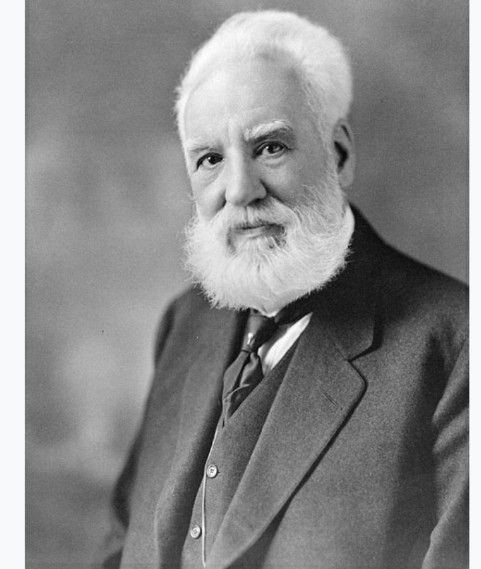
Alexander Graham Bell, a Scottish-born inventor and scientist, is credited with inventing the first practical telephone. Born on March 3, 1847, in Edinburgh, Scotland, Bell was fascinated by the human voice and the mechanics of speech. His work on communication devices, including the harmonic telegraph, laid the foundation for the development of the telephone.
The Eureka Moment
On March 10, 1876, Bell spoke the now-famous words “Mr. Watson, come here, I want to see you” to his assistant, Thomas Watson, over a telegraph wire. This marked the first successful transmission of speech over wires, and the telephone was born. Bell’s innovative design used a diaphragm, coil, and magnet to convert sound waves into electrical signals, which were then transmitted over wires.
How the Telephone Works
So, how does the telephone magic work? Here’s a simplified explanation:
1. Sound Waves: When you speak into the telephone’s mouthpiece, your voice creates sound waves.
2. Diaphragm: These sound waves hit a thin metal diaphragm, causing it to vibrate.
3. Coil and Magnet: The vibrating diaphragm is connected to a coil, which moves back and forth within a magnetic field. This movement generates an electrical signal.
4. Signal Transmission: The electrical signal is transmitted over wires to the receiving telephone.
5. Receiving End: The process is reversed, with the electrical signal causing a diaphragm to vibrate, reproducing the original sound waves.
The Impact of the Telephone
The telephone revolutionized communication, transforming the way people connect and interact. It:
– Transformed Business: Enabled rapid communication, facilitating global trade and commerce.
– Connected Families: Allowed people to stay in touch with loved ones across distances.
– Saved Lives: Provided a lifeline in emergency situations.
The telephone’s impact was swift and profound. By the early 20th century, telephones had become a staple in homes and businesses worldwide. Today, with the advent of mobile phones and internet-based communication, the telephone has evolved into a powerful tool that’s an integral part of our daily lives.
Legacy of the Telephone
The telephone’s invention marked the beginning of a new era in communication. It paved the way for subsequent innovations like:
– Mobile Phones: Wireless communication on-the-go.
– Internet Telephony: Voice over Internet Protocol (VoIP) technology.
– Video Conferencing: Real-time video communication across distances.
As we look back on the telephone’s history, it’s clear that Alexander Graham Bell’s invention was a game-changer. It not only connected people but also transformed the way we live, work, and interact.
The telephone’s story is a testament to human ingenuity and the power of innovation. As we continue to push the boundaries of communication technology, we build upon the foundation laid by pioneers like Bell, shaping a more connected and accessible world.


💬 COMMENT