

Malaysia Airlines Flight 370, often referred to as MH370, vanished on March 8, 2014, during a routine journey from Kuala Lumpur to Beijing, carrying 239 people on board. What began as a standard overnight flight turned into one of aviation’s greatest unsolved enigmas, sparking global searches, intricate investigations, and a plethora of theories. Despite extensive efforts spanning over a decade, the main wreckage remains undiscovered, leaving families in limbo and the world pondering what truly happened to the Boeing 777.Background on the FlightMH370 was a scheduled international passenger flight operated by Malaysia Airlines, departing from Kuala Lumpur International Airport (KLIA) en route to Beijing Capital International Airport. The aircraft was a Boeing 777-200ER, registered as 9M-MRO, which had been in service since 2002. It was powered by two Rolls-Royce Trent 892 engines and had accumulated over 53,000 flight hours with no major incidents prior to the disappearance,caside from a minor wingtip damage in 2012. The plane’s last maintenance check occurred on February 23, 2014, and its crew oxygen system was replenished the day before takeoff.On board were 227 passengers from 15 nationalities, predominantly Chinese (153) and Malaysian (38), along with smaller groups from countries including Indonesia, Australia, India, and France.
The 12-member crew was entirely Malaysian, led by Captain Zaharie Ahmad Shah, a highly experienced pilot with over 18,000 flying hours, and First Officer Fariq Abdul Hamid, who was transitioning to the 777 model. The cargo included everyday items like mangosteens and lithium-ion batteries, all compliant with international regulations. en.wikipedia.orgThe flight was unremarkable at first, taking off from runway 32R at approximately 00:42 MYT (Malaysian time) on March 8, 2014, with clear weather and no reported issues.The Disappearance: A Detailed TimelineThe sequence of events leading to MH370’s vanishing unfolded rapidly yet mysteriously:
No distress signals were sent, and the deviation from the planned route appeared deliberate, with systems like the transponder manually disabled. Analysis of Inmarsat data revealed the plane flew southward into the remote Indian Ocean, far from its intended path.
Initial Response and Global Search Efforts
News of the disappearance broke at 02:40 MYT when Malaysia Airlines announced loss of contact, though the plane was still airborne at that time. A multinational search and rescue operation began in the South China Sea and Gulf of Thailand, involving ships and aircraft from Malaysia, China, Vietnam, and others. By late April 2014, 345 sorties had been flown and 19 vessels deployed, but no wreckage was found.On March 15, 2014, Malaysian Prime Minister Najib Razak revealed the flight had been deliberately diverted, shifting focus to northern and southern corridors based on satellite data. The Joint Agency Coordination Centre (JACC) was established in Perth, Australia, on March 17 to lead efforts, with costs shared among Malaysia (58%), Australia (32%), and China (10%).Underwater searches commenced in October 2014, covering 120,000 square kilometers in the southern Indian Ocean by January 2017, at a cost exceeding US$150 million. Advanced tools like autonomous underwater vehicles (AUVs) and towed pinger locators were used, but no black boxes or major debris were recovered. The search was suspended in January 2017, deemed “almost inconceivable” without results by the Australian Transport Safety Bureau (ATSB).Private firm Ocean Infinity resumed operations in January 2018 on a “no find, no fee” basis, scanning 112,000 square kilometers until June 2018, again without success.
Debris Discoveries and Drift Analysis
The first confirmed debris—a flaperon from the right wing—was found on Réunion Island in July 2015, verified in September via serial numbers. It indicated the flaps were not extended, suggesting a high-speed impact. Additional pieces, including a stabilizer panel, flap track fairing, and engine cowling fragments, washed ashore in Mozambique, South Africa, Tanzania, Madagascar, Mauritius, and Rodrigues between 2016 and 2017. By October 2017, 18-20 items were deemed likely from MH370.Drift modeling by ATSB and CSIRO pinpointed a probable crash site around 35°36′S 92°48′E in the southern Indian Ocean. Barnacle analysis confirmed the debris had been adrift for the expected duration, supporting a southern corridor endpoint.
Investigations and Official Findings
A Joint Investigation Team (JIT) involving Malaysia, China, the UK, US, and France led the probe. Malaysia’s preliminary report (April 2014) and final report (July 2018) concluded the disappearance was due to “manual inputs” and deliberate diversion, but could not pinpoint the cause. Mechanical failure was ruled unlikely, and no evidence supported terrorism or hijacking claims. The ATSB’s final report (October 2017) suggested the plane was on autopilot until fuel exhaustion, leading to an uncontrolled spiral dive.Criticisms included delays in data sharing, contradictory statements, and radar gaps. Recommendations adopted by ICAO included extended flight recorder durations, improved underwater locator beacons (ULBs), and real-time tracking every 15 minutes for oceanic flights.
Theories Surrounding the Disappearance
The lack of conclusive evidence has fueled numerous theories, though official reports emphasize human intervention:
- 00:41-00:42 MYT: The plane departs Kuala Lumpur, climbing to cruising altitude of 35,000 feet (Flight Level 350).
- 01:07 MYT: The last Aircraft Communications Addressing and Reporting System (ACARS) message is sent; the system is deactivated shortly after.
- 01:19 MYT: The final voice communication with air traffic control: “Good night, Malaysian three seven zero,” as the plane approaches the waypoint IGARI over the South China Sea, handing off to Vietnamese airspace.
- 01:20-01:21 MYT: The transponder ceases broadcasting, causing the plane to disappear from secondary radar. Military primary radar later detects a westward turn over the Malay Peninsula.
- 01:30-02:15 MYT: The aircraft is tracked heading northwest over the Andaman Sea, then likely southward.
- 02:22 MYT: Last detection on military radar northwest of Penang Island at 29,500 feet.
- 02:25 MYT: Satellite communications resume with an Inmarsat “handshake,” indicating the plane is still airborne.
- 08:19 MYT: The final satellite handshake occurs, suggesting fuel exhaustion after approximately 7 hours and 31 minutes of flight.
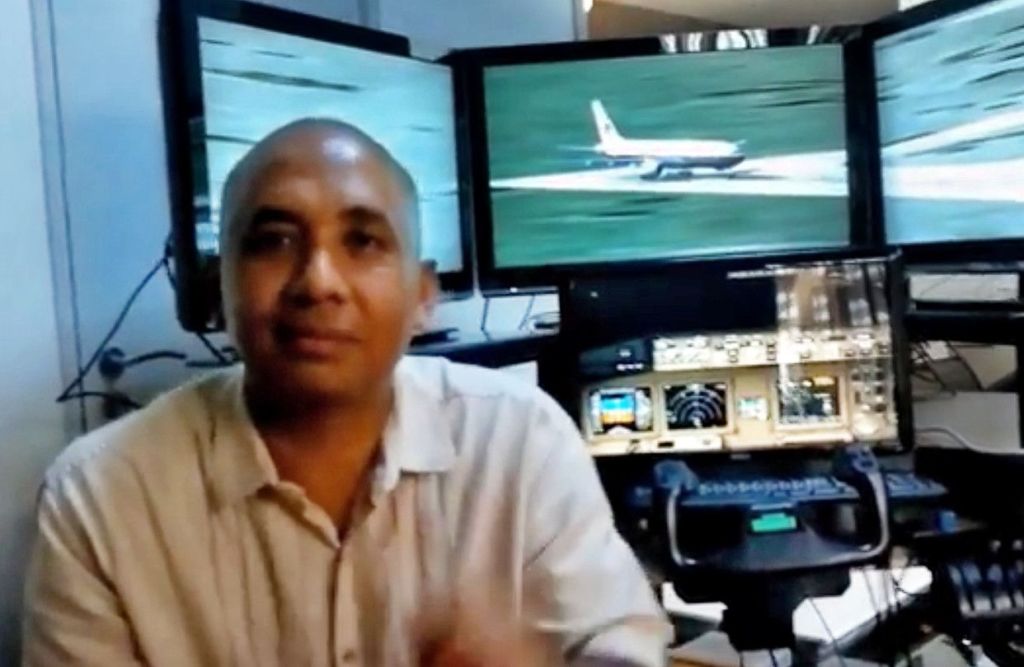
- Pilot Suicide/Mass Murder-Suicide: The leading theory posits Captain Zaharie deliberately diverted the plane. His home flight simulator showed a similar southern Indian Ocean route simulated weeks prior. Personal issues were speculated, though unproven.
- Hypoxia or Unresponsive Crew: A gradual cabin decompression could have incapacitated everyone, allowing the plane to fly on autopilot until fuel ran out.
- Hijacking or Third-Party Intervention: Early suspicions involved passengers with stolen passports (later cleared as asylum seekers). No group claimed responsibility, and no demands were made.
- Mechanical Failure or Fire: Ruled out due to no distress calls and deliberate system disablements.
- Other Speculations: Shot down (no shrapnel evidence), cyber hijacking, or supernatural elements—largely dismissed as conspiracy theories.
While murder-suicide aligns with evidence like the simulator data and manual turns, the investigation remains open.
Recent Developments and Ongoing Searches
In March 2024, Malaysia committed to resuming searches following Ocean Infinity’s proposal with new evidence. Approved in December 2024, the operation restarted on December 30, 2025, targeting 15,000 square kilometers on a 55-day “no find, no fee” basis. It was briefly suspended in April 2025 due to weather but resumed later that year.As of January 15, 2026, the vessel Armada 8605 had surveyed 7,236 square kilometers with no significant discoveries. Speculation about “unusual behavior” of the vessel was debunked by experts, who clarified it was routine operations. Families continue advocating for answers, and acoustic studies in 2024 suggested potential reassessment of the crash site.
Legacy and Impact on Aviation
The MH370 tragedy prompted sweeping changes in aviation safety, including mandatory real-time tracking and longer-lasting black box signals. It highlighted vulnerabilities in global radar coverage and the need for better international cooperation. For the families of the 239 lost souls, the absence of closure remains profound, with compensation processes ongoing since the flight was declared an accident in January 2015.More than a decade later, MH370 stands as a stark reminder of aviation’s fragility. While technology advances offer hope for eventual resolution, the southern Indian Ocean’s depths continue to guard their secrets, ensuring the mystery endures.


💬 COMMENT