
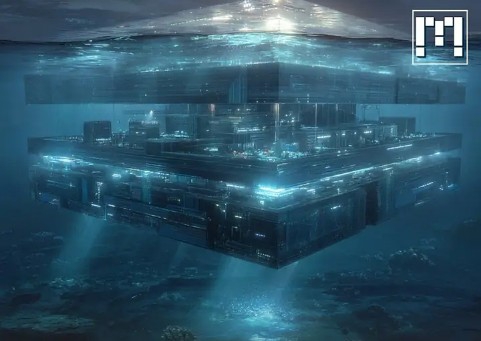
As the digital age propels humanity into an era dominated by artificial intelligence and massive data processing, the energy demands of conventional data centers pose a significant environmental challenge. China’s groundbreaking initiative to construct underwater data centers, exemplified by MechaBytes’ $223 million project, offers a fascinating case study in leveraging natural resources for sustainable technological infrastructure. From a scientific standpoint, this approach presents both compelling advantages and complex engineering considerations.
The Thermodynamics of Oceanic Cooling
The fundamental principle behind underwater data center cooling lies in the high specific heat capacity of water. Water requires a substantial amount of energy to raise its temperature, making it an excellent heat sink. The deep ocean, in particular, maintains remarkably stable and low temperatures year-round. By submerging servers in this environment and circulating seawater around the heat-generating components, the facility can effectively and passively dissipate the thermal energy produced by the processors. This direct liquid cooling method is significantly more efficient than traditional air-based cooling systems, which suffer from lower heat transfer coefficients and require substantial energy for air circulation and refrigeration. The reported 30% reduction in power consumption is a direct consequence of bypassing these energy-intensive processes. Furthermore, the stable temperature of the deep ocean mitigates the risk of thermal cycling, which can stress electronic components and reduce their lifespan.
Renewable Energy Integration and Environmental Considerations
The commitment to powering these underwater data centers with 97% wind energy aligns with the broader scientific understanding of mitigating climate change. Wind turbines harness kinetic energy from the movement of air, converting it into electricity without the emission of greenhouse gases associated with fossil fuels. Integrating this renewable energy source with the energy-efficient cooling system creates a synergistic effect, drastically reducing the overall carbon footprint of the data center.
However, the deployment of such infrastructure necessitates rigorous scientific assessment of potential environmental impacts on the marine ecosystem. Studies must be conducted to evaluate the effects of thermal discharge, even if minimal, on local marine life. The materials used in the construction of the data center must be carefully selected to prevent leaching of harmful substances into the ocean. Noise and electromagnetic emissions from the submerged facility also warrant investigation to ensure they do not disrupt marine animal behavior. Long-term monitoring of the surrounding environment will be crucial to validate the sustainability claims and address any unforeseen ecological consequences.
Engineering and Material Science Challenges in the Deep Sea
From an engineering perspective, constructing and maintaining a complex electronic system in the harsh underwater environment presents formidable challenges. Material science plays a critical role in ensuring the long-term reliability of the data center. Components must be resistant to corrosion caused by saltwater, high pressure at depth, and biofouling (the accumulation of marine organisms on submerged surfaces). Advanced sealing technologies are required to maintain a hermetic environment for the sensitive electronic equipment. Furthermore, the deployment and retrieval of modules for maintenance or upgrades require specialized robotic systems and subsea engineering expertise. The design must also consider the potential for seismic activity and other geological events that could impact the structural integrity of the facility.
Future Directions and Scientific Inquiry
China’s underwater data center initiative opens up exciting avenues for future scientific research and development. Further studies can focus on optimizing heat exchange mechanisms in seawater cooling systems, developing novel bio-fouling resistant materials, and designing autonomous underwater maintenance robots. The long-term performance and reliability of these submerged systems will provide valuable data for assessing the feasibility of widespread adoption of this technology. This pioneering project underscores the importance of interdisciplinary collaboration between computer science, engineering, marine biology, and material science to create sustainable solutions for the ever-growing demands of the digital world.


💬 COMMENT