
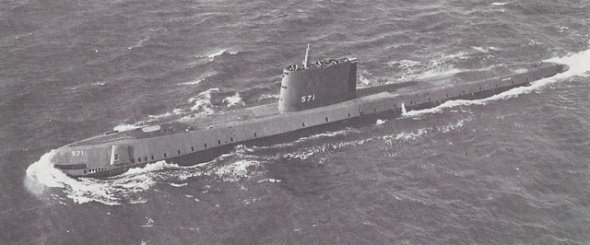
The concept of a submersible vessel, capable of traveling unseen beneath the waves, has captivated the human imagination for centuries. From ancient myths of underwater chariots to Leonardo da Vinci’s visionary sketches, the idea of a submarine has been a persistent dream. However, the path from fantasy to reality was a long and arduous one, marked by brilliant innovation, daring experimentation, and a relentless pursuit of the impossible. The invention of the submarine is not a single event but a cumulative story of inventors, engineers, and visionaries who, piece by piece, unlocked the secrets of underwater travel.
Early Pioneers and the Quest for Submergence
The earliest verifiable attempts at building a submarine date back to the late 16th and early 17th centuries. In 1578, English mathematician and inventor William Bourne published a work detailing a design for a submarine. While his design was never built, it laid the theoretical groundwork for future efforts. The first successfully tested submersible is often credited to the Dutch inventor and engineer Cornelis Drebbel. Around 1620, he constructed a human-powered submarine for King James I of England. Drebbel’s vessel, a wooden frame covered in greased leather, was reportedly able to submerge and resurface in the River Thames, carrying a number of passengers. The method of propulsion was a row of oars extending through watertight seals, and the air quality was maintained by a chemical process, a secret Drebbel took to his grave.
The Dawn of Military Submarines
The 18th century saw a shift in focus from mere novelty to the potential military application of submarines. The American Revolution provided the perfect backdrop for this. In 1776, American inventor David Bushnell unveiled the “Turtle.” This one-man, egg-shaped submarine was designed to attach a bomb to the hull of a British warship. The “Turtle” was a marvel of its time, incorporating features still found in modern submarines, such as a ballast tank for submerging and surfacing, and a screw propeller for propulsion. While its attack on the HMS Eagle was unsuccessful due to the copper sheathing on the ship’s hull, the “Turtle” demonstrated the viability of the submarine as a weapon of war and earned its place as the first combat submarine.
Propulsion and the Industrial Revolution
The 19th century was a period of rapid technological advancement, and the submarine benefited immensely from the innovations of the Industrial Revolution. Inventors experimented with various power sources, moving beyond human muscle. In 1800, American inventor Robert Fulton, better known for his steamboats, built the “Nautilus” for Napoleon Bonaparte’s French navy. The “Nautilus” was a significant leap forward, utilizing a hand-cranked propeller when submerged and a sail when on the surface. Fulton’s vessel, however, was ahead of its time, and a lack of interest from the French government led to its abandonment.
The American Civil War further spurred submarine development. The Confederate States, facing a naval blockade, desperately sought an advantage. This led to the creation of the CSS H. L. Hunley. This hand-cranked, iron submarine achieved infamy in 1864 when it successfully sank the Union sloop-of-war USS Housatonic with a spar torpedo. Tragically, the Hunley and its crew were lost in the process, making it the first submarine to sink a ship in combat and a testament to the immense dangers of early underwater warfare.
The Modern Era: From Steam to Diesel-Electric
The late 19th and early 20th centuries were the golden age of submarine development, leading to the vessels we recognize today. The key challenge was finding a reliable and efficient power source that could work both on the surface and underwater. John Philip Holland, an Irish-American engineer, is widely considered the father of the modern submarine. His designs, starting with the “Fenian Ram” in 1881, were the first to successfully integrate a gasoline engine for surface propulsion and electric motors for submerged travel.
Holland’s most influential design was the USS Holland, launched in 1897. This vessel was a complete and practical submarine, incorporating a torpedo tube and a ballast system that made diving and surfacing predictable. The U.S. Navy purchased the Holland in 1900, establishing the U.S. Submarine Force. Soon after, other navies around the world, including the British and Japanese, adopted Holland’s design, marking the birth of the modern submarine fleet.
Legacy of the Submarine
The invention of the submarine has had a profound impact on naval warfare, science, and exploration. From the silent hunters of World Wars I and II to the nuclear-powered behemoths of the Cold War, submarines have played a pivotal role in shaping modern history. Today, they are not only military assets but also invaluable tools for scientific research, from mapping the ocean floor to studying marine life.
The journey of the submarine, from Drebbel’s leather boat to today’s nuclear-powered vessels, is a story of human ingenuity, perseverance, and the unyielding desire to conquer the final frontier on Earth: the deep sea. It stands as a testament to the power of a simple, yet revolutionary, idea that has changed the world forever.


Leave a Reply to vermavkv Cancel reply