
How It Works
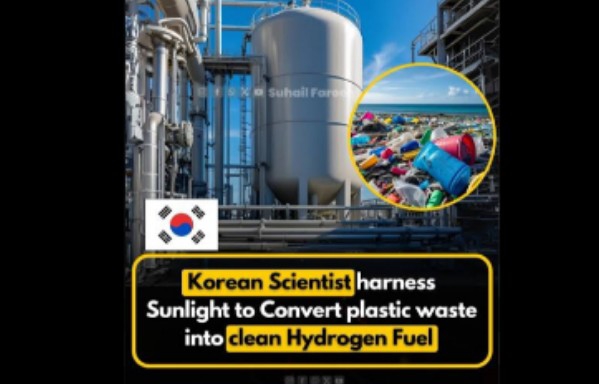
A groundbreaking new technology developed by Korean scientists is offering a promising solution to two of the world’s most pressing challenges: plastic pollution and the need for clean energy. They have unveiled a revolutionary method that transforms plastic waste into clean hydrogen fuel using only sunlight, a process that is not only efficient but also produces zero emissions. This innovative approach is being hailed as a “dual-purpose energy” solution with the potential to revolutionize waste management and clean energy production.
The traditional methods of dealing with plastic waste—landfilling and incineration—contribute to environmental damage and greenhouse gas emissions. While recycling is a better option, it is not always economically viable for all types of plastic. The new technology addresses these issues head-on by converting discarded plastics into a valuable clean energy source.
How It Works: Harnessing Sunlight for Catalytic Conversion
At the heart of this innovation lies a sophisticated photocatalytic process. This process utilizes specially designed catalysts – materials that can speed up chemical reactions without being consumed themselves – and the energy from sunlight to break down the complex molecular chains of plastic polymers. Here’s a closer look at the key steps involved:
* Plastic Pre-processing: While the exact details may vary depending on the specific plastic type and the scientists’ implementation, the process likely starts with some form of pre-processing of the plastic waste. This could involve shredding or other methods to increase the surface area of the plastic, making it more accessible for the catalytic reaction.
* Photocatalyst Interaction: The pre-processed plastic is then brought into contact with the photocatalyst material. These catalysts are engineered to absorb sunlight efficiently and possess active sites that can facilitate the breakdown of the plastic molecules.
* Sunlight Activation: When sunlight strikes the photocatalyst, it excites electrons within the catalyst material. This creates energy that drives the chemical reactions on the surface of the catalyst.
* Polymer Breakdown (Photocatalysis): The excited electrons and other reactive species generated by the sunlight-activated catalyst interact with the long chains of hydrocarbons that make up plastic polymers. These interactions lead to the breaking of chemical bonds within the plastic molecules.
* Hydrogen Generation: Through a series of chemical reactions facilitated by the catalyst and solar energy, the carbon and hydrogen atoms from the broken-down plastic molecules are rearranged. This process specifically extracts hydrogen atoms, which then combine to form hydrogen gas (H₂).
* Clean Byproducts: A significant advantage of this method is its clean nature. Ideally, the primary byproduct of this process, besides hydrogen gas, would be less complex and environmentally benign carbon-based compounds. The image highlights “zero emissions,” suggesting that the process is designed to minimize or eliminate the release of harmful pollutants commonly associated with plastic disposal.
* Hydrogen Collection: The generated hydrogen gas is then captured and can be stored or directly used as a clean fuel source.
This sunlight-driven catalytic conversion offers a sustainable and environmentally friendly way to deal with plastic waste while simultaneously producing clean hydrogen fuel. The “dual-purpose energy” nature of this technology holds immense potential for creating a circular economy where waste is transformed into a valuable resource, contributing to a cleaner and more sustainable future. Further development and scaling of this technology could have a significant impact on both the environment and the energy sector.


Leave a Reply to Dushyant kumar Cancel reply